By Dan Walsh
One of the major visitor attractions in the south-east is the National 1798 Rebellion Centre at Enniscorthy and having emerged from the Covid-19 lockdown the doors to history are open again and visitors are welcome.
The Centre had been threatened with sale of the property to a local businessman, thankfully the sale collapsed in July 2020 and the iconic building on Mill Park Road returned to the business of history and heritage.
The audio-visual presentation places the story of 1798 in an international context and was admired as a fascinating journey to modern democracy. Indeed, entrance is across a small pond called the Bridge of Democracy.
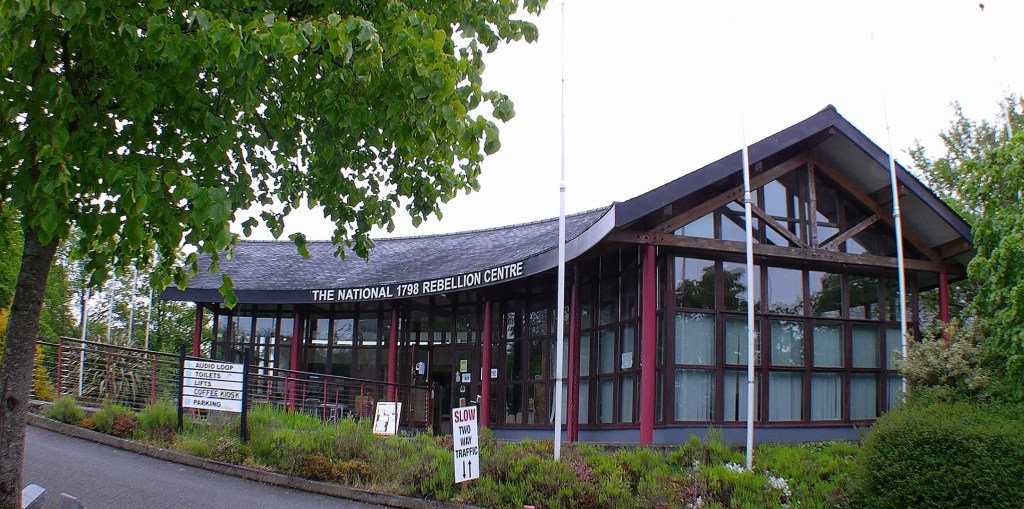
The concept of the Centre was initiated at a meeting of the Board of Directors on Comoradh ’98 in 1991, and the late Cllr Andy Doyle and Town Clerk, Donal Minnock, spearheaded the project and oversaw the purchase of the old Christian Brothers monastery.
A framework document was developed by the local librarians and historians under the chairmanship of Nicholas Furlong, and Wexford native, Matthew O’Connor, Managing Director of the National Building Agency, prepared a design and layout for the building, which included the old monastery building, which came into the possession of the brothers’ in 1894.
The Friends of ’98, headed by Rich Howlin, were charged with raising £1m needed to draw down £1.6m, which had been secured from the European Regional Development Fund.
The Wexford Senate was used to raise the £1m, and the names of every senator was engraved on the walls of the new Visitor Centre (it has since been re-named the National 1798 Rebellion Centre). Tenders were advertised in March 1997; construction work commenced in May; the building programme was completed in December, and the interpretive design created by Event, a Dublin-based company, was completed over three months and first opened to mark the bicentenary of the 1798 rebellion in 1998.
 WexfordLocal.com