By Dan Walsh on Bree Hill
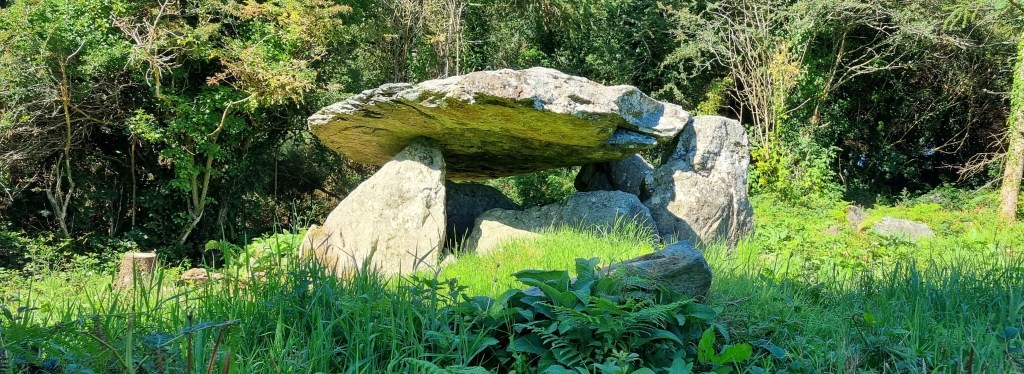
Ballybrittas Dolmen, hiding low down on the western slope of Bree Hill, dates from around 1800 BC, and far and away the oldest man-made building in Co. Wexford and next Sunday it takes on a new identity when the Ballybrittas Dolman Trail is officially opened to the public.
It is an ambitious extension to the existing Bree Hill Trail and the meeting point is Bree Community Centre for the opening ceremony at 12.45pm by Cllr John O’Rourke, Cathaoirleach of Enniscorthy Municipal District Council. Local archaeologist Colm Moriarty will give a talk about the dolmen at the site.
Credit is given to Bree Trail Committee; a sub-committee of Bree Development Group and the extension was completed due to €50,000 grant funding. The project is supported by the Department of Rural and Community Development and Wexford County Council.
Writing in my book, Bree; The Story of a County Wexford Parish (edited by the late Gerry Breen and long out of print) in 1980, my sources for research on the Ballybrittas Dolmen was the Early Irish History Department at UCD, Dublin.
The Ballybrittas Dolmen belongs to a group of megalithic tombs called ‘portal dolmens’, so called because the massive stones holding up the large capstone, that could weigh anything from 20 to 100 tons weight) are sometimes arranged in the shape of a porch.
It is said that the site at Ballybrittas is a classic site for portal dolmens – on the side of a townland close to a hill – in this case the River Boro, a tributary of the River Slaney famed in local poetry and verse.
Nothing is known of the dolmen makers apart from the tombs they built were for their dead. They would have had no writing, or no metals at all, although they might have been aware that metals existed.
Today, I survived the 6.2km (3.9 miles) trail, via Bree Hill, steep slopes in both directions and not for the faint-hearted, but the panoramic views from the east coast, across south Wexford and towards New Ross were pin-sharp accompanied by 26 degrees and brilliant sunshine.
 WexfordLocal.com