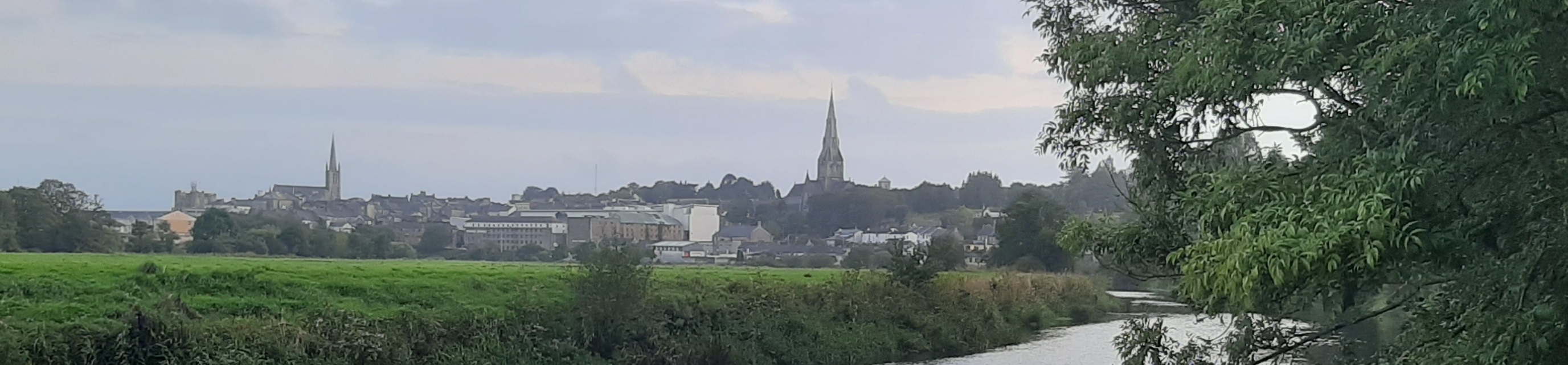

By Dan Walsh at Rostoonstown Beach
An ecology and restoration report describes Lady’s Island as “a dead lake” in relation to the water quality and, in particular, agricultural water pollution. And this idyllic part of south Wexford famous for its around-the-lake pilgrimages is getting much media attention.
Lady’s Island Lake is being described as “a lagoon of enormous ecological, historical and spiritual significance.” It is also labelled “one of the most polluted lagoons in the Republic of Ireland.”
Lady’s Island Lake is a highly legally-protected waterbody, designated as a Special Protection Area (SPA), with the largest mixed tern colony in Ireland. It hosts internationally important populations of Sandwich Tern and Roseate Tern, and nationally important populations of Common Tern and Arctic Tern.
The site formerly supported internationally important numbers of wintering waterfowl, but in recent years numbers have declined drastically, possibly due to a decline in the abundance of their main food source, the bottom growing (benthic) Ruppia plant species.
In the 1980s, prior to being polluted, the clear water of the lagoon, allowed for a well-developed benthic sward of widgeon grass (Ruppia sp.) which grew on the lake bed.
But since the 1980s, the lagoon has switched to a waterbody dominated by plankton (largely cyanobacteria), with the die off of benthic, bottom growing species on foot of increasing pollution and poor water transparency.
The lagoon is also protected as a Special Area of Conservation (SAC) due to its status as a coastal lagoon. This places a legal obligation on the State to return this habitat to Favourable Conservation status, which includes specific targets for water quality, outlined in the conservation objectives for the site.
The site is also protected under the Water Framework Directive (WFD), which requires the water quality to be at ‘good status’ by 2027 at the latest. The lake is currently at ‘poor’ status.
In spite of what should be strong legal protections, the lagoon has undergone a significant ecological deterioration, primarily on foot of agricultural nitrate pollution, with a loss of its characteristic benthic, bottom growing plant species, and a switch to algae and cyanbacteria, with concomitant impacts on bird species and other ecology.
Lady’s Island Lake is indicative of a much wider nitrogen pollution problem, and could be a useful case study for the Irish Government to demonstrate the ambition which they claim to have when it comes to addressing agricultural water pollution. However, in order to do that, they will have to look beyond the current ineffective regulations and measures, and implement some far-reaching changes in how the land in the catchment is managed.
No doubt the saga will ramble on. Viewing the lake from Rostoonstown beach today I didn’t see much more than clear water and locals were reminding me of the days when channels were cut into the sea and the lake mixed the fresh water with the salty sea!
 WexfordLocal.com