
By Dan Walsh
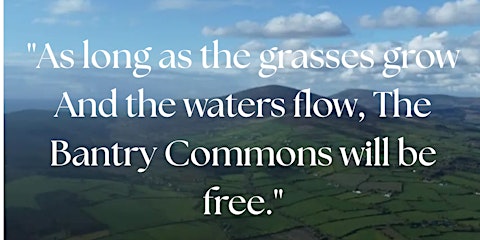
The premiere of a documentary entitled ‘The Bantry Commons Case’ will be screened in conjunction with the Uí Cinnsealaigh Historical Society in the Riverside Park Hotel, Enniscorthy, tomorrow night (Wednesday) at 7.30pm.
John Cooney and Tony Asple founded Blackstairs Media Productions to produce documentaries, believing the Bantry Commons case required more than a five-minute video.
As a result, they chose to create an in-depth documentary on the topic. Filming began last summer with location shoots in the Blackstairs/White Mountain area, alongside research gathering. Fellow student in Maynooth, Nuala Dundon was integral to the research and joins them in the documentary.
The score was originally composed by Seána Redmond, with additional music and traditional arrangements contributed by Mary Kate and Paula Ní Mhurchú from Courtnacuddy, as well as Tony Asple, Martin Codd, and Joe White. The production also benefitted from the voluntary participation of local amateur actors.
Background to the Bantry Commons Case. The battle for commonage rights took place in the Bantry Commons, in the barony of Bantry, Co. Wexford. It ran from the Confederate Wars (1641–53) to 1844, when the local prominent landlord, Thomas Kavanagh, Borris House, Co. Carlow, lost his exclusive commonage rights to the people of the barony, after a court case taken by a tenant farmer, Mr Prendergast, of the adjoining parish of Ballindoney in the townland of Templeludigan.
The tenants were supported by Fr. Thomas Furlong of Killegney. Furlong was parish priest of Killegney from 1816 until his death in 1852. He was prominent in Daniel O’Connell’s Catholic Association in the fight for Catholic Emancipation, took an active role in the anti Tithe campaign in the 1830s and again O’Connell’s Repeal movement in the 1840s. Such were Furlong’s efforts in the Bantry Commons case he was given the title ‘The King of Bantry’ by the local inhabitants.
The little-known Bantry Commons legal cases, referred to locally as the White Mountain legal cases, of the 1840s are significant as they capture the complexities of the issue of tenant rights, the growing in confidence of the tenant voice and the question of landownership in pre-Famine Ireland. The backdrop to this story is the widespread agrarian unrest among tenants, their economic hardship and the legal system that both protected and oppressed them.

