At a recent meeting of the Local Community Development Committee (LCDC) members approved funding for projects across County Wexford. The funding which includes €646,703.72 for 12 projects under the LEADER Programme and €150,065 to 85 community and voluntary groups under the 2021 Community Enhancement Programme.
Chair of LCDC, Cllr. Lisa McDonald, thanked the members for their commitment to the programme and acknowledged their efforts in ensuring that both businesses and community groups across the county could access this vital funding particularly through this difficult period.
The official sod turning at the €12.8 million Wastewater Treatment Plant at Arthurstown serving the communities of Duncannon, Arthurstown and Ballyhack took place last Friday morning.
The plant will provide wastewater treatment for the first time for the equivalent of almost 1,875 people and the works will ensure the communities have the capacity for social and economic development into the future and will also ensure the protection and the integrity of the environment.
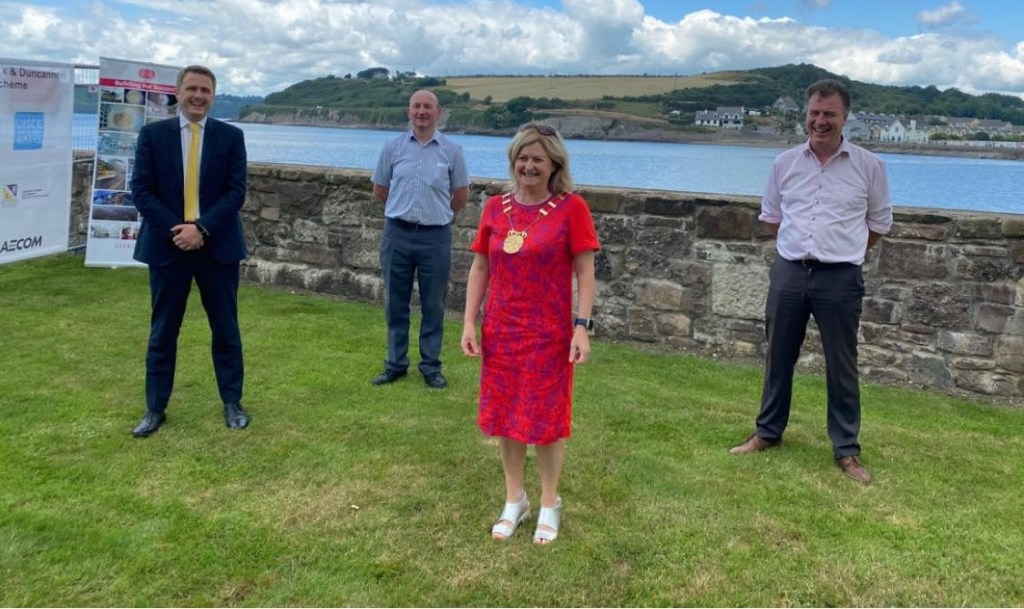
Minister of State James Browne, Cllr John Fleming, Cllr Barbara-Anne Murphy, Cathaoirleach Wexford County Council, who performed the official launch, and Cllr Michael Whelan at the official opening of the Arthurstown Wastewater Plant last Friday.
Cathaoirleach of Wexford County Council, Cllr Barbara Anne Murphy was on hand to officiate at the sod turning; “The commencement of this vital sewerage infrastructure development will lead to enhanced tourism opportunities for the beautiful villages of Arthurstown, Ballyhack and Duncannon. The removal of untreated wastewater to this estuary has long been a goal of Wexford County Council, and we can now look forward to all the benefits of a cleaner environment, previously denied due to the lack of treatment in the area. These works will also hasten the return of our Blue Flag Beach status to Duncannon. I very much welcome the investment from Irish Water in conjunction with Wexford County Council.’
Paul Fallon, Programme Manager with Irish Water said; “This is big day for the communities of Duncannon, Arthurstown and Ballyhack and we are so pleased to finally get the project underway. This is such a beautiful part of the country and to think that this Irish Water project will eliminate the equivalent of 1,500 wheelie bins of raw sewage flowing into the Barrow, Nore, Suir estuary every day is something to be positive about.
“The size and scale of the challenge of raw sewage discharging into our water ways is well documented, however, the good news is that Irish Water has a plan to get to grips with this and similar areas around Ireland. This project is due for completion in 2023 and will support social and economic development and protect our marine life in the years to come too. I’d finally like to pay tribute to our colleagues in Wexford County Council, Sisk, Aecom and Atkins who have done a fantastic job to date and I look forward to bringing this project to completion with them”.
Minister of State James Browne said; “It’s great to see this project get underway. It has been a long time in the making, and it will open so many new opportunities for the communities of Arthurstown, Duncannon and Ballyhack. I wish Irish Water, Wexford County Council and Sisk the best of luck with the works.”
Chief Executive of Wexford County Council, Tom Enright, also warmly welcomed the commencement of construction of the much needed Wastewater Treatment Plant, stating that “the works when completed in approximately 16 months’ time will bring great benefits to the villages and surrounding areas in terms of environmental improvements, water quality, infrastructural development, tourism and investment.’ The Chief Executive also thanked Irish Water and the staff of Wexford County Council for bringing the project to this juncture and wished contractors Sisk Group well in their endeavours.
Although numbers were limited at the event due to COVID-19 restrictions, the communities were well represented by their elected representatives, business leaders and other members of the community.
Well-known celebrity chef and author Kevin Dundon was in Arthurstown to see the works kick off, he is passionate about his locality and the environment; “For all of us living and working in a coastal community, this is a fabulous environmental step forward. Cleaner beaches and water for residents and visitors alike means better living. Hopefully, the blue flags will return soon because of this wastewater treatment development.”
Lorraine Waters from Hook Lighthouse was also on hand to witness the Sod Turning; “Hook lighthouse too is delighted to hear its partnering villages Duncannon, Arthurstown and Ballyhack will soon have a new wastewater treatment plant, as all our areas are striving to go green and become more eco-friendly this is indeed good news, especially in a time where we are now hoping to, in the coming years increase our visitor capacity to our beautiful county.”
Chairman of New Ross Municipal District, Cllr Patrick Barden was also in attendance; “Protecting our environment has never been more important than it is today. With this new treatment system for the villages of Arthurstown Ballyhack and Duncannon, we are taking a major step in the right direction regarding improving our environment here in this lovely area. Over the years these villages have been restricted in their ability to expand and diversify due to the lack of adequate sewage treatment. This problem is now being resolved and we can look forward to realising the full potential of these vibrant communities. I would like to acknowledge the role of Irish Water and Wexford County Council in the delivery of this ambitious project. I also look forward to the day when the neighbouring village of Ramsgrange will also be connected.”
A spokesperson for Irish Water told WexfordLocal.com that across the bay in Dunmore East and all along the Waterford coastline, the practice of discharging raw sewage into the waterways has been eliminated since 2017. The investment of €24 million there delivered seven new wastewater treatment plants in towns and villages across Co. Waterford including Ardmore, Ballyduff/Kilmeadan, Cappoquin, Dunmore East, Kilmacthomas, Stradbally and Tallow. Half of the raw sewage entering waterways in Ireland has now been eliminated and there is a plan to remove the remainder in the years to come.
The volunteer lifeboat crew at Fethard RNLI were requested to launch by the Irish Coast Guard on Saturday at 5.34pm, to assist a person in difficulties on their jet ski.
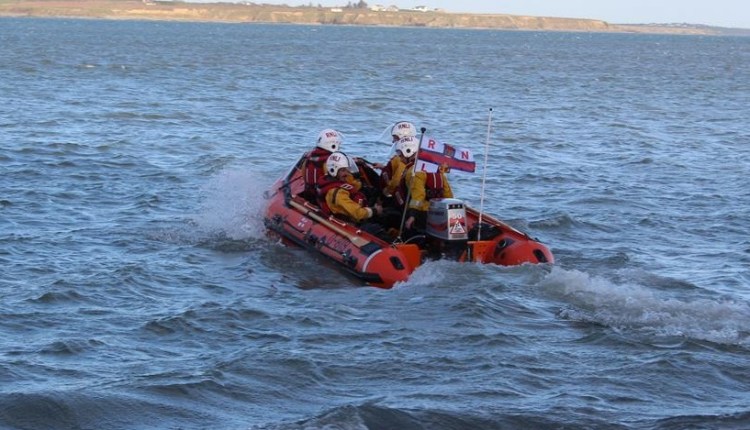
The crew launched the D-Class lifeboat Naomh Dubhán on the beach under Duncannon Fort. Duncannon beach lifeguards and Rescue 117 Helicopter were also involved in the rescue.
FETHARD RNLI Lifeboat on exercise. Pic; RNLI/Nigel Millard.
Conditions were calm with a light breeze on the hottest day of the year. As the lifeboat proceeded to the area where the jet ski was located, it was established from communications with the Irish Coast Guard that the male was assisted ashore by the lifeguard and locals and was receiving casualty care at Duncannon Harbour.
Fethard lifeboat crew recovered the beached jet ski, towing it into the harbour and then rendered assistance with the care of the casualty.
Speaking about the incident Fethard RNLI Volunteer Helm John Colfer said; “It was a very positive outcome showing the teamwork achieved by the lifeguards, the Coast Guard helicopter and ourselves.” John also took the opportunity to remind all pleasure craft users to “Always wear a personal flotation device. Stay with your craft in an emergency as it will keep you afloat and easy to locate. Make sure you are wearing suitable clothing for weather and water conditions, as warm air conditions do not mean warm water conditions.”
A large section of the once enclosed perimeter wall has fallen, scorched trees and discarded beer cans indicate the residue of anti-social behaviour and evidence of disrespect and neglect secretly spoils the small cemetery attached to the once existent St Senan’s Psychiatric Hospital at Killagoley, on the outskirts of Enniscorthy.
Nobody knows how many people are buried there and nobody knows their names. There is an exception. Rose Quinn, who was abandoned by her family and died in the Wexford District Lunatic Asylum, as St Senan’s used to be known, has not been forgotten.
A four-year investigation by her great-niece, Patricia Quinn-Murphy, brought Rose’s fate into the public arena. Patricia’s findings suggest that Rose was one of countless Irish people, mostly women, banished to asylums and erased from memory in the first half of this century.
Patricia, who lives in Wexford, first heard of Rose when she began to compile a family tree shortly before her father died in 1994. He listed his aunts and uncles, all familiar names, and then added: “And there was Rose.” It was the first time she had heard the name.
Her father went on to describe his recollection, as a six-year-old, of standing outside the parish church in Clongeen, Foulksmills, in 1906, as his mother tried to persuade Rose, then aged 35, to go through with an arranged marriage against her will.
All he knew was that Rose married the man but refused to live with him, was committed to an asylum and died within a year. “I decided I had to find out about her life, so I started trying to get information from St Senan’s.”
Initially the hospital was unable to assist and said records from the time were not available. It referred her to Wexford County Council, which at one time was responsible for health administration, but it, too, had no information. In the meantime, Patricia established that Rose was not buried with either her husband’s or her own family.
_The old burial ground attached to St. Senan’s Hospital, Enniscorthy
She did not become aware of the cemetery behind St Senan’s until September 1999, when she decided to call to the hospital and seek information directly. A staff member took her to the back of the hospital and showed her the small, private cemetery.
Some small white crosses were placed by a boundary wall, and a larger cross stood in the middle. But there were no names and nothing to mark individual graves.
Patricia Quinn wrote letters to local politicians, clergy, a local newspaper, anybody who might be able to help. Then a local researcher Margaret Hawkins took an interest in the issue, she produced a documentary and wrote the story in a book – Restless Spirit; The Story of Rose Quinn, published by Mercier Press, 2006) and real public progress commenced.
“Rose was admitted to the asylum on February 16th, 1907, with “melancholia”. This was three months after her marriage. She died, probably from TB contracted in the hospital, on May 4th the same year, less than six months after her wedding.
The records also show she had been transferred to the asylum from the workhouse at New Ross. The circumstances in which she went to the workhouse in the first place are not clear, but she could have been referred there by the asylum if it were overcrowded.
The cemetery at St Senan’s was used until the 1940s and probably became operational shortly after the asylum was opened in 1868. It is unknown how many people were buried there.
The dead of St Senan’s Hospital were remembered by staff and patients, and for about 30 years or so a Patron had been held at the cemetery each summer.
Patricia Quinn’s quest for answers came to a “happy end” when a monument was unveiled at the cemetery by the Bishop of Ferns, Dr Brendan Comiskey in October 2000. It carries the dedication: “Sacred to the memory of all the people who were laid to rest in this graveyard many years ago.” A committee was also established by the hospital to oversee the maintenance of the cemetery in the future.
The St. Senan’s Hospital site and land has been sold and the burial grounds just outside the walls of the St. Senan’s lands beside a public road and public access is open. Sadly, it appears that those who were laid to rest here without name and record, briefly remembered by Margaret Hawkin’s documentary and book and Patricia Quinn’s determination to find answers from the past, are once more neglected and forgotten.
This July excavations will be relaunched and the digs are open to volunteers, with all required training and equipment provided on site as Wexford County Council is working alongside the Irish Archaeology Field School on a standout archaeology project in the Irish National Heritage Park at Ferrycarrig.
Digging the Lost Town of Carrig is a unique archaeological project based in the Irish National Heritage Park since 2018, a project established as a partnership between Irish Archaeology Field School and the Irish National Heritage Park with support from Wexford County Council, will further investigate this historically significant, medieval site.
Volunteers can also participate in rebuilding lost elements of the town under the tuition of specialists such as experimental archaeologist Dr Brendan O’ Neill and local stonemason Pat Hickey.
The project was interrupted by restrictions associated with the Covid-19 pandemic in 2020. However, this July the excavations will be relaunched, in the form of a community dig.
Wexford County Council’s Heritage Officer, Catherine McLoughlin, commented: “Wexford County Council is delighted to support this engaging community project. It is a positive opportunity for members of the public to get really involved with our local history and heritage, right at the coalface. We are incredibly lucky to have such a historically significant site at our fingertips in Wexford in the Irish National Heritage Park and the variety of opportunities for engagement over the next few weeks will enable both longstanding enthusiasts and curious newcomers of all ages to get involved.”
Upcoming Community Dig opportunities include: Community Excavation (July 26th– August 13th); Community volunteers will assist in the excavation of the first recorded Anglo-Norman stronghold in Ireland. There are also opportunities to help tell the story of this historically significant site in a tangible and relatable manner through the construction of replica medieval walls and even the building of a medieval smith’s house.
These construction activities will be led by Dr. Brendan O’Neill of University College Dublin and local stonemason Pat Hickey. The excavation is led by Dr Denis Shine and is entirely free to participants (including park entry). The excavation site can also be visited by anyone (subject to paying park entry) from July 22nd to August 13th, if they are curious about the site.
Carrig Open Day (August 6th 12-6pm).; An Open Day focused on medieval life (and fun) for the whole family. The day will feature an archaeological kid’s camp (with Dig it Kids), storytelling, site tours, experimental archaeology workshops, battle re-enactments (with the Horsemen of Eire), ‘medieval’ amusement games (with the Bemusements Games) and more. All events are free – subject to normal park entry fees.
Archaeological masterclasses (weekly throughout the summer); Participants will get to undertake practical workshops with leading archaeological specialists in bioarchaeology, medieval ceramics, geoarchaeology and experimental archaeology. These workshops are held once a week from July 21st to August 10th. Community volunteers on the excavation will be given preferential booking, but additional places may be available. These classes are subject to park entry fees.
The archaeological site, now located within the Irish National Heritage Park, was built in the winter of 1169 by Robert FitzStephen and was the first recorded Anglo-Norman stronghold in the country. A stone castle, medieval borough and deerpark later developed close to (or on) the site of the ringwork in the 13th century. The Carrig project is centred on a major research excavation of the ringwork castle, and later castle settlement. Excavations at the site from 2018 to date have focused on the ringwork, later 13th century castle and 14th century hall and chapel. The aim going forward is to continue this research but also to expand to other areas of Carrig’s settlement, such as the borough and deerpark. The longer term research project is being undertaken by the Irish Archaeology Field School in partnership with the Irish National Heritage Park.
Irish Water, working in partnership with Wexford County County Council wishes to advise of night time restrictions on the Enniscorthy Water Supply due to increased demand and a drop in level of the reservoir.
The night time restrictions are essential to ensure homes and businesses have sufficient supply during the daytime. The restrictions will be in place tonight Friday, July 16th from 11pm to 6am the following morning and from 11pm on Saturday, July 17th, until 6am on Sunday morning. Irish Water understands the inconvenience of such outages and is working closely with the Local Authority partners to ensure there is uninterrupted supply during daytime hours. All vulnerable customers will be contacted in advance.
ENNISCORTHY
Irish Water continues to work currently, with local authority partners, contractors and others to safeguard the health and well-being of staff and the public and to ensure the continuity of drinking water and wastewater services.
Customers should continue to report any issues directly to Irish Water’s call centre which operates 24/7 on 1800 278 278 or by email to operations@water.ie. Real time reporting allows for the investigation of the reported odour as close to the time of the incident as possible.
To have one book published is an outstanding achievement, to be signed up for a trilogy is amazing, but that is the excitement that is unfolding in the literary life of Anne McLoughlin from Peppardscastle, near Kilmuckridge.
Speaking to WexfordLocal.com Anne McLoughlin made her announcement; “After many years working at the keyboard, I’ve made the breakthrough with a three-book deal with Poolbeg Press during Covid, and two books of my historical novels based on a fictional family tree, have already been released. It is known as The Lives Trilogy.
The first one Lives Apart, published last November, has had rave reviews on Amazon and Goodreads and the second one was only released in May, so is only starting to get in the reviews and ratings.
“It has been a difficult time for authors during Covid, with the bookshops having been closed for so long, book festivals cancelled, no launches, no library readings, but it gave me a boost nonetheless to have got the contract,” Anne, who added; “With new authors like myself, Poolbeg are just releasing the books as eBooks and Paperback on Demand through Amazon and Book Depository to test the water. Many publishers have found that they have warehouses of books that they can’t shift due to the lockdowns and lack of promotional opportunities, but hopefully that will all change when we’re all vaccinated, and the country gets back to normal.”
Book one of the Lives Trilogy is Lives Apart as we already mentioned; book number two is Lives Without End, and the third publication expected next Spring will be called Lives Reunited.
ANNE McLOUGHLIN
Anne McLoughlin added; “I’ve done a few Zoom drop-ins to Book Clubs and they were great fun to do. Avid readers, all of whom had read the first book and were very much engaged. I even managed to do one with a book club in Alabama and another with the United Irish Cultural Centre of San Francisco.
Lives Apart looks at the experience of emigration, both for those who had the courage to venture across the Atlantic and those they left behind. One review said; “History sits gently and characters lead, with McLoughlin, sensitive to the human condition as she follows the lives of the McNamara family in Ireland and America.”
Lives Without End is an emotional tale of family secrets spanning three generations from the time of the Irish famine. Set in Ireland, in Clare and Wexford and in Boston, this second book in the ‘Lives’ trilogy focusses on the beautiful, but emotionally fragile, Bridie, a young bride, full of hope and courage, who, following a tragedy, emigrates from Ireland to build a new life in America.
Missing person Stuart Van Der Bliake has been located deceased. Gardai wish to thank the public for their assistance in this matter. No further action is required. No further information is available.
Stuart Van Der Bliake, 59 years, was missing from the Rosslare Harbour area since Tuesday, June 15th 2021.
Wexford County Council has decided not to take advantage of an optional Ministerial Act to delay the draft County Development Plan by one year and instead to press forward with the Plan. This decision was made at last Monday’s monthly meeting of the Council held with Microsoft Teams in line with Covid-19 guidelines and protocols.
Deputy CEO Tony Larkin told the meeting that the Minister has indicated that he is bringing in a procedure to allow local authorities to consider County Development Plan’s – the Bill has passed in the Dail and the President has signed it – and the Act is expected to be enacted this week.
Members were circulated with the document and the choices were for members to bring a resolution to initiate the extension procedure or to push on without an extension which would require a special meeting.
Cllr Pip Breen suggested the Council proceed as planned. “It is as good as it’s going to get,” said Cllr Breen, who added; “We passed this Plan last October and we should proceed with it as we are now.”
Cllr John Hegarty seconded Cllr Breen’s proposal and pointed out that there is no clear indication that any better Plan would emerge and he hinted that there is every chance it could potentially end up with less satisfactory or worse Plan. “There is a huge amount of work gone into taking it to this stage and I now note that there are more and more external voices who are interfering with the process. Us as councillors are the only ones with responsibility for producing a Plan for County Wexford,” concluded Cllr Hegarty.
Cllr Michael Whelan favoured carrying on to the next stage and felt that the matter could be looked at later, but he wondered if it were sending a message to the Regular by people of Wexford and other counties, that would consider themselves rural counties, that they are not happy!
Cllr Jackser Owens said he would not support the Plan, “if people are not allowed to build where they are born. If they want to live in the country, they should be allowed. I will not vote to stop people from living in their own area.”
Cllr Michael Sheehan said he could not see how going for an extension would improve the Plan. “I would like to continue on, but I would be happier if we could continue ‘in person’, in the County Chamber, or some other chamber, as we are finding to our cost online is unsatisfactory, and we are better off reconvening that meeting in September when we can all sit around the same room and sort out whatever issues needs sorting out and move it on from there.”
Speaking on behalf of the Independent members of the Council, Cllr Pat Barden claimed that “contrary to what John (Hegarty) said about ‘external influence’ I don’t believe there is any ‘external influence’, we got very good advice and if Fianna Fail and Fine Gael want to get advice they are entitled to do so as well, We have a proposal that we extend it for one year. There is a lot of stuff to be considered and I do not think we should be rushing it through. There is the situation with the densities and with one-off housing – two huge issues.”
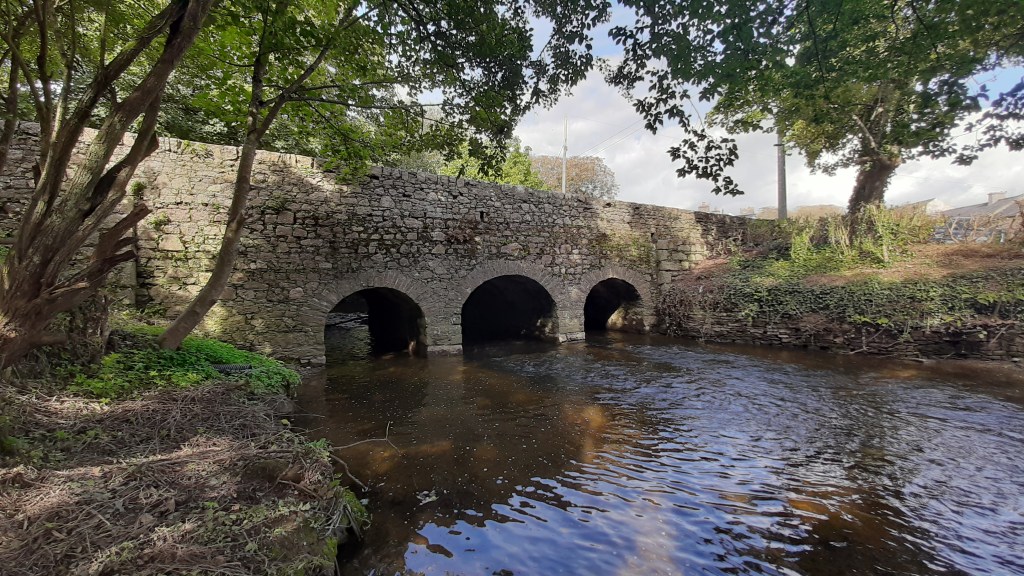
The beauty of Co. Wexford. Built heritage in DUNCORMICK village. (Pic; WexfordLocal.com)
Cllr Fionntán Ó Suilleabháin stated that “as councillors we are almost neutered of powers” but favoured proceeding with the existent Plan, “otherwise it could be a case of out of the frying pan and into the fire and I say that as someone who is one hundred percent in favour of rural living.”
Cllr Joe Sullivan felt there was nothing to be gained by extending the timeframe and he believed that the executive planners had worked well with the councillors in the composition of the Plan and he was happy to proceed.
Cllr Oliver Walsh said it was the fourth County Development Plan that he was involved in as a member and was well used to the procedure and he said “the previous three, while not perfect in every way, I think they have worked well for the county and the draft Plan is ‘our draft Plan drawn up by the members of this County Council with the help of the executive planners and I don’t see any point in delaying this process.”
There were also contributions from Cllrs Willie Kavanagh, Davy Hynes, Cathal Byrne, John Fleming, Jim Codd, Kathleen Codd-Nolan, Andrew Bolger, Lisa McDonald, Anthony Connick, Aidan Browne, Garry Laffan and George Lawlor.
Cllr Garry Laffan proposed to proceed with the Plan, but only when convenient to do so, ‘in person’, and Cllr Michael Sheehan seconded.
It was decided to meet ‘in person’ on September 6th with Covid-19 guidelines approval?
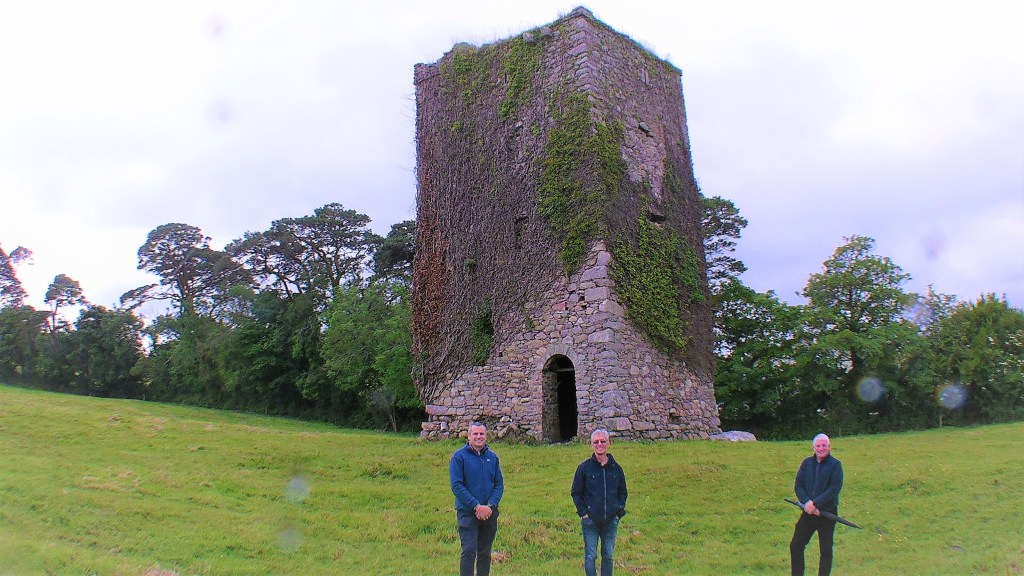
Barntown Castle has weathered many storms for centuries, but in the 21st century the structure is in a very vulnerable state and to prevent inevitable collapse and destruction, essential remediation works are a matter of the utmost urgency.
Fortunately, Barntown Heritage Group, working in partnership with the landowner, are working towards carrying out essential repair works to the base of the tower house walls by the late summer.
This is where your help is needed, as part of a grant allocation from Historic Structures Fund and other secured funds, the community group need to fundraise a further €5,300 to complete phase 1 of these important conservation works.
These funds will go towards the repair and stabilisation works to the base of the tower house wall and repointing of the outer walls up a height of 2-metres from the base of the castle and the addition of a tower house door to secure its physical history.
Archaeologist Ronan O’Flaherty told WexfordLocal.com that Barntown Castle is one of the best surviving examples of a Wexford Castle – a bit later than the Norman castles dotted around the south-eastern counties.
Saving 16th century BARNTOWN CASTLE. (left to right); MICHAEL BRAZZILL, Chairman Barntown Heritage Group, RONAN O’FLAHERTY, archaeologist, and MAYOR OF WEXFORD CLLR GARRY LAFFAN.
Barntown is a late medieval, possibly 16th century tower house of four storeys, with the entrance protected by a machicolation. The lobby shows evidence of a murder hole and the battlements have been destroyed.
It was built by the Roches as a protection for the garrison that supplied Ferrycarrig Castle with provisions and was held by Walter Roche until his death in 1561 when it passed to his heir, William Wadding.
More on Save Barntown Castle can be heard on Mid Week Voices with Dan Walsh on South East Radio this Wednesday evening at 8pm.
AUDIO ADDITION; Michael Brazzill, Chairman Barntown Heritage Group tells Dan Walsh about the Save Barntown Castle Campaign.






 WexfordLocal.com